You know how quickly a sealed room can start to feel stuffy.
We see this daily in our line of work, where poor ventilation transforms a comfortable space into a trap for humidity and pollutants. If you are wondering how to improve indoor air quality in your Singapore home, you have come to the right place.
Cool Earth Aircon Services began as a one-man operation back in 2007 when Brian completed his technical apprenticeship to fix these exact issues. Today, the stakes are higher than ever for both residential properties and commercial businesses.
Most of us spend about 90 percent of our time indoors in Singapore. A recent 2025 ASHRAE report highlighted that offices with poor ventilation see a 130 percent rise in sick leave due to respiratory illnesses. This data clearly shows that unmanaged indoor air directly impacts daily health and productivity.
The situation is equally critical in our homes, where families breathe recirculated air all night. So, I am going to break down the main reasons our air quality degrades. Then, I will walk through the exact, practical steps you can take to fix it.
Why Indoor Air Quality Matters in Singapore
The Humidity Factor
Singapore’s average outdoor humidity ranges from 70 to 90 percent year-round. When indoor humidity is not properly managed, it creates massive problems. A 2025 report from BELFOR notes that this constant moisture creates optimal conditions for microbial contamination. Our technicians frequently find severe mould growth in air conditioning systems, carpets, and pantries simply because the air is too damp.
- Mould growth: This fungus thrives above 60 percent relative humidity and spreads rapidly in unmanaged spaces.
- Dust mites: These microscopic creatures flourish in humid environments and serve as a leading cause of allergic rhinitis in Singapore.
- Musty odours: That damp, stale smell indicates excessive moisture and potential bacterial buildup inside the room.
- Respiratory irritation: High humidity makes breathing feel heavier and can severely aggravate asthma symptoms over time.
The Haze Factor
Singapore experiences severe haze episodes, typically between June and October. Forest fires in neighbouring countries send smoke and particulate matter directly across the region. During these periods, you need to monitor the National Environment Agency (NEA) readings closely. The 1-hour PM2.5 concentration is your best guide for immediate decisions.
Once the PM2.5 level hits 56 to 150 micrograms per cubic metre, the NEA classifies it as Band II or “Elevated.” At this level, you should take immediate precautions:
- Healthy individuals must reduce strenuous outdoor activities.
- Vulnerable people should stay inside completely.
- Close all your windows to seal the perimeter tightly.
- Rely entirely on your aircon for safe, filtered ventilation.
The Sealed Room Problem
Modern Singapore homes and commercial buildings are designed to be well-sealed for maximum energy efficiency. This design keeps your cooling costs down, but it also traps pollutants, allergens, and moisture inside. Every contaminant that enters your space simply accumulates over time.
We constantly check carbon dioxide levels to assess ventilation quality during our inspections. The NEA strongly recommends keeping indoor CO2 below 800 ppm in enclosed spaces. When levels rise above this mark, it indicates poor airflow and often leads to headaches or a sluggish feeling throughout the day.
Step 1: Keep Your Aircon Filters Clean
Your air conditioning unit’s mesh filter is the first line of defence against airborne particles. Every time the system runs, room air passes through this barrier, which physically traps dust, pollen, pet dander, and other particulates.
How Often to Clean
In Singapore, you must clean your aircon filters every 2 to 4 weeks. If you have pets, live near a dusty construction site, or are facing the annual haze season, you should increase this frequency to every 2 weeks without fail.
How to Clean
We recommend a highly structured approach to routine filter maintenance.
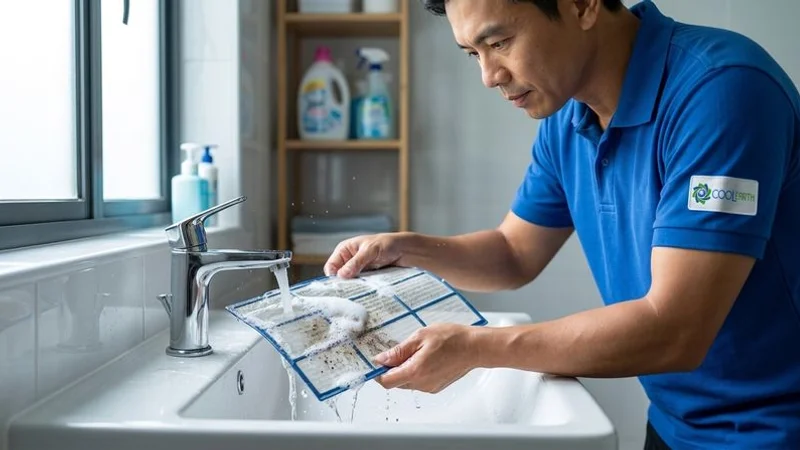
- Switch off the aircon and open the front panel carefully.
- Slide out the filter panels from their tracks.
- Rinse the mesh under running water, using your fingers to gently dislodge stubborn dust.
- Soak heavily soiled filters in a mild soapy water solution for 10 minutes.
- Rinse the parts thoroughly and let the filter dry completely before reinserting it.
- Never use the aircon with wet filters, as the trapped moisture directly promotes internal mould growth.
A clean filter improves your daily air quality and drastically reduces energy consumption at the same time. Dirty coils and clogged filters force the blower motor to work harder to push air through. Local industry data shows that this restriction reduces your energy efficiency by at least 10 to 15 percent. This basic maintenance task is one of the simplest things you can do for both your respiratory health and your monthly electricity bill.
Step 2: Schedule Regular Aircon Servicing
Even with extremely diligent filter cleaning, ultra-fine particles will pass through and accumulate on the evaporator coil and fan blower over time. This internal buildup rapidly becomes a breeding ground for thick mould and bacteria. The system then blows these harmful contaminants back into your room every time the compressor kicks in.
General Servicing vs. Chemical Wash
Homeowners often ask us about the difference between a standard service and a deeper clean. A professional general service cleans the accessible coil surface, flushes the drainage pipe, and checks for minor operational issues. We usually recommend booking this service every 3 to 4 months to prevent the gradual degradation of your indoor air quality.
A chemical wash is a much more intensive process designed to eliminate deep-rooted contamination. It uses targeted antimicrobial solutions to kill mould and bacteria hidden deep within the coil fins and fan blower.
| Feature | General Servicing | Chemical Wash |
|---|---|---|
| Process Time | 45 to 90 minutes per unit | 3 to 5 hours per unit |
| Cleaning Depth | Surface dust removal, basic flush | Complete dismantling, deep biofilm removal |
| Recommended Frequency | Every 3 to 4 months | Every 6 to 12 months (or as needed) |
| Best For | Routine maintenance, preventing blockages | Severe odours, water leaks, allergy relief |
If you or your family members have specific allergies or respiratory conditions, scheduling a chemical wash every 6 months is a highly effective choice. The immediate difference in air quality is always noticeable. Also, for older units, a full chemical overhaul can identify worn mechanical parts and extend the equipment’s functional lifespan by 3 to 5 years.
Signs Your Aircon Is Affecting Air Quality
You should watch out for specific warning signs that indicate a heavily contaminated system.
- Musty or mouldy smell when the unit first starts blowing air.
- Visible dark mould spots on the exterior vents or the internal plastic blower wheel.
- Increased sneezing, coughing, or itchy eyes specifically when the cooling is running.
- Unexplained allergic symptoms that magically improve the moment you leave the room.
If you notice any of these distinct signs, you need to schedule a deep clean promptly. Continuing to run a mould-contaminated unit is directly harmful to your long-term health.
Step 3: Maintain the 60 Percent Humidity Rule
The ideal indoor humidity for both human health and physical comfort sits right between 40 and 60 percent. Above 60 percent, microbial growth accelerates rapidly across your walls and furniture. Below 40 percent, you will likely experience dry skin, irritated eyes, and minor respiratory discomfort.
How Your Aircon Helps
Your air conditioning naturally dehumidifies the space as it lowers the temperature. When warm, humid air passes over the freezing evaporator coil, the moisture condenses and drips away safely. This exact process produces the continuous condensate water that flows out of your drainage pipe.
We always advise our clients to actively optimise this natural dehumidification effect.
- Use Dry mode on days when the humidity is high but the room temperature feels perfectly comfortable. This specific setting uses less energy and focuses entirely on aggressive moisture removal.
- Avoid setting the temperature too low, as excessively cold rooms cause the compressor to cycle off before it can adequately dehumidify the trapped air.
- Keep interior doors closed when the unit is running normally. Leaving doors open allows humid air from the rest of the house to flood right back into the cooled room.
Measuring Humidity Effectively
A simple digital hygrometer costs about $10 to $20 in local hardware stores and provides a highly accurate, real-time humidity reading. Place one sensor in each air-conditioned room. You should aim to keep the reading strictly between 50 and 60 percent while the cooling is active. Maintaining this specific range is proven to completely stifle dust mite populations and prevent damaging condensation on your walls.
Step 4: Address Specific Pollution Sources
Managing Kitchen Fumes
Singapore kitchens act as a massive source of intense indoor air pollution. Cooking, especially deep-frying and stir-frying with high heat, produces dense oil particles, thick smoke, and volatile organic compounds (VOCs). These dangerous pollutants can cause severe PM2.5 spikes that spread quickly throughout your HDB flat or condo.
- Always run the kitchen exhaust fan or range hood at maximum speed when cooking meals.
- Close the kitchen door tightly to prevent greasy fumes from drifting into your clean bedrooms.
- Never run your living room aircon while cooking if your kitchen features an open-concept design. The unit will suck in the airborne oil particles and clog your delicate mesh filter almost instantly.
Renovation Off-Gassing
New furniture, fresh paint, and custom carpentry release dangerous VOCs like formaldehyde and benzene for weeks or even months after installation. This invisible off-gassing process is a massive health issue in Singapore, where proud homeowners frequently update their properties.
- Ventilate the newly renovated home as aggressively as possible for the first 2 to 4 weeks.
- Use the air conditioner’s fan mode with the windows slightly cracked open. This setup circulates the indoor air without trapping the dangerous chemical pollutants inside.
- Choose low-VOC paints and certified green building materials whenever you start a new project.
Chemical Cleaning Products
Strong commercial cleaning liquids release toxic chemical fumes that linger for hours in a sealed, heavily air-conditioned room.
- Switch to gentler, plant-based cleaning solutions for your daily household chores.
- Open your windows briefly after mopping the floors to flush out the harsh fumes before closing up and turning the cooling back on.
Step 5: Consider Air Purifiers for Problem Areas
For households with sensitive allergy sufferers, young children, or elderly family members, a standalone air purifier provides an essential additional layer of protection.
What Air Purifiers Add
Your standard mesh filter captures larger particles like heavy dust and floating pet dander. However, most basic wall-mounted units simply cannot capture the microscopic threats circulating in your home.
- Fine particulate matter (PM2.5), which becomes highly concentrated during the regional haze season.
- Dangerous bacteria and microscopic airborne virus particles.
- Volatile organic compounds emitted from fresh paints and chemical cleaning sprays.
- Ultra-fine household allergens that trigger severe asthma attacks.
We highly recommend investing in a good standalone air purifier equipped with a True HEPA filter. According to recent market reports, the Singapore Air Purifier Market is expected to reach USD 280 million by 2030 precisely because these advanced devices capture 99.97 percent of harmful particles down to 0.3 microns.
Placement and Usage Tips
- Position the purifier in the specific room where your family spends the most time, which is usually the master bedroom or the main living area.
- Keep the device running simultaneously while the aircon is on, as the two systems complement each other perfectly.
- Avoid placing the unit in a tight corner or directly behind heavy furniture, because it requires completely unobstructed airflow to function efficiently.
- Replace the internal HEPA filter strictly according to the manufacturer’s suggested maintenance schedule.
Surviving the Haze Season
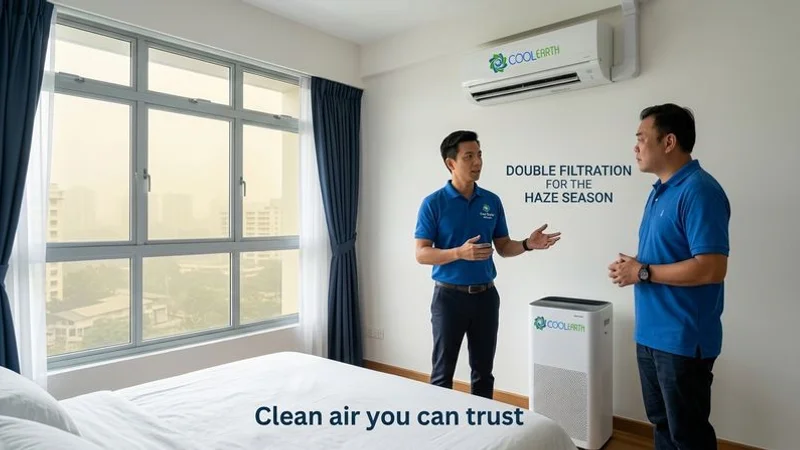
When the NEA’s 1-hour PM2.5 reading jumps into the “Elevated” Band II range, you must take immediate, decisive action. Keep all windows tightly closed, run your air conditioning with freshly washed filters, and blast your HEPA air purifiers at maximum speed. This combined filtration strategy provides the absolute best protection against toxic haze particles infiltrating your safe living space.
Step 6: Develop Good Daily Habits
Small, consistent daily habits make a massive difference in your long-term respiratory health over time.
Strategic Ventilation
- Open your main windows for 15 to 30 minutes every single morning before the tropical heat sets in.
- This brief air exchange flushes out the accumulated carbon dioxide and brings the indoor levels back below the recommended 800 ppm threshold.
- This practice is absolutely vital for small bedrooms that remain sealed tight overnight.
Bedding and Soft Furnishings
- Wash your bedsheets and pillowcases weekly in hot water set to exactly 60 degrees Celsius to effectively kill dust mites.
- Vacuum upholstered furniture, thick carpets, and heavy fabric curtains on a strict regular schedule.
- Use high-quality, allergen-proof mattress covers if someone in your immediate family suffers from severe dust mite allergies.
Indoor Plants and Shoes
While indoor plants add great aesthetic value to an apartment, you must be extremely careful about overwatering them. Damp potting soil in a warm, humid Singapore home acts as a powerful mould magnet. Ensure all your decorative pots have proper drainage holes and let the top layer of soil dry out completely between waterings.
Finally, always leave your shoes right at the main entrance door. Outdoor footwear constantly tracks in street dust, sticky pollen, and harmful bacteria from the public pavements outside.
How to Improve Indoor Air Quality in Your Singapore Home: The Aircon Connection
Your air conditioning unit acts as both your greatest asset and your biggest potential liability when managing indoor air quality. A well-maintained system filters out debris, controls the sticky humidity, and keeps your family perfectly comfortable. A neglected system circulates toxic mould spores, bacteria, and accumulated dust right back into your face with every breath you take.
The difference between a healthy home and a sick one comes down entirely to basic maintenance. Regular filter washing, combined with professional servicing every 3 to 4 months, keeps the system running cleanly. Adding periodic chemical washes ensures you eliminate the deep microbial growth that standard cleaning misses.
We know how easy it is to forget about these complex machines until they suddenly break down. If it has been a while since your last service visit, or if you have noticed any sudden changes in the air quality at home, please do not delay. The oxygen you breathe every single day is completely worth protecting.
At Cool Earth Aircon, our dedicated technicians help Singapore homeowners maintain not just cool spaces, but genuinely healthy ones. From routine check-ups to intensive chemical overhauls, we ensure your equipment contributes to cleaner air rather than polluting it. We also accurately diagnose and fix common issues like an aircon not cooling properly or sudden water leaks, which are often the very first signs of severe internal contamination.
Concerned about how to improve indoor air quality in your Singapore home? WhatsApp us today at wa.me/6594273833 to schedule a comprehensive health check. We will carefully inspect your system and recommend the perfect servicing plan to improve the air you breathe.

Brian founded Cool Earth Aircon in 2007. With 18 years of hands-on experience servicing aircon systems across Singapore, he leads a team that has maintained over 4,560 units.
Licensed Aircon Technician | 18 Years Experience | Three Best Rated (Tampines)