When comparing HDB vs Condo Aircon: What you actually need to consider goes far beyond basic aesthetics. You know how quickly a simple hardware upgrade in Singapore can turn into a frustrating maze of permits and piping restrictions.
Our team at Cool Earth Aircon Services has managed these exact property variations daily since Brian founded the company in 2007.
A generic installation strategy simply does not work.
We will break down the latest regulatory limits, compare realistic 2026 pricing data, and outline practical steps to choose the most efficient cooling solution for your specific home layout.
The Fundamental Difference
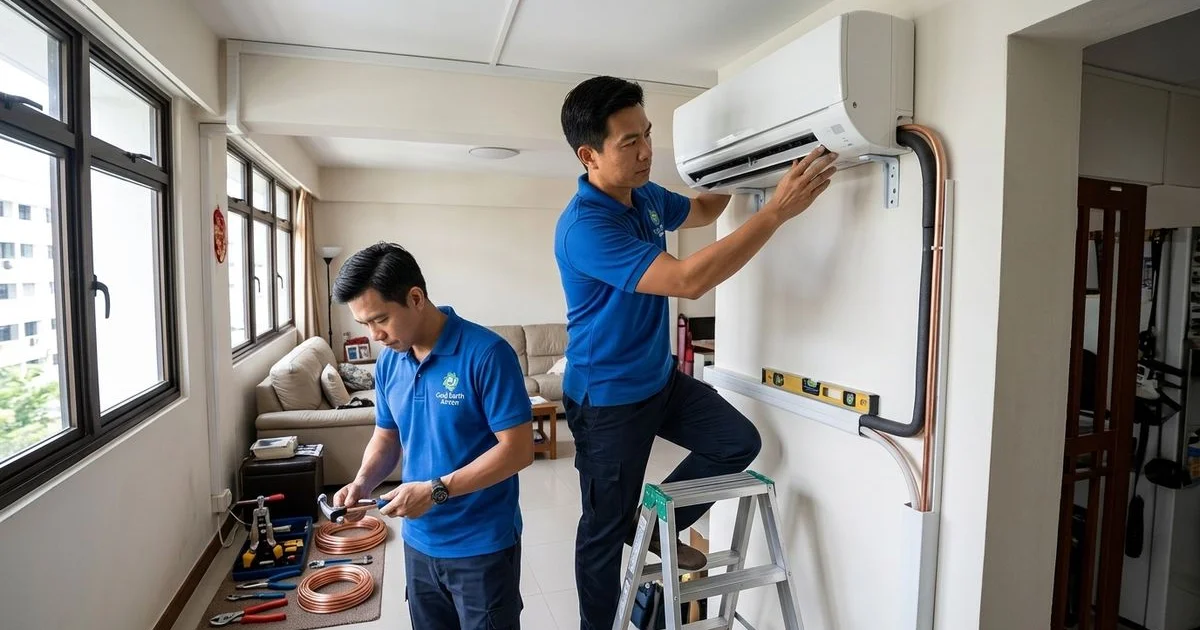
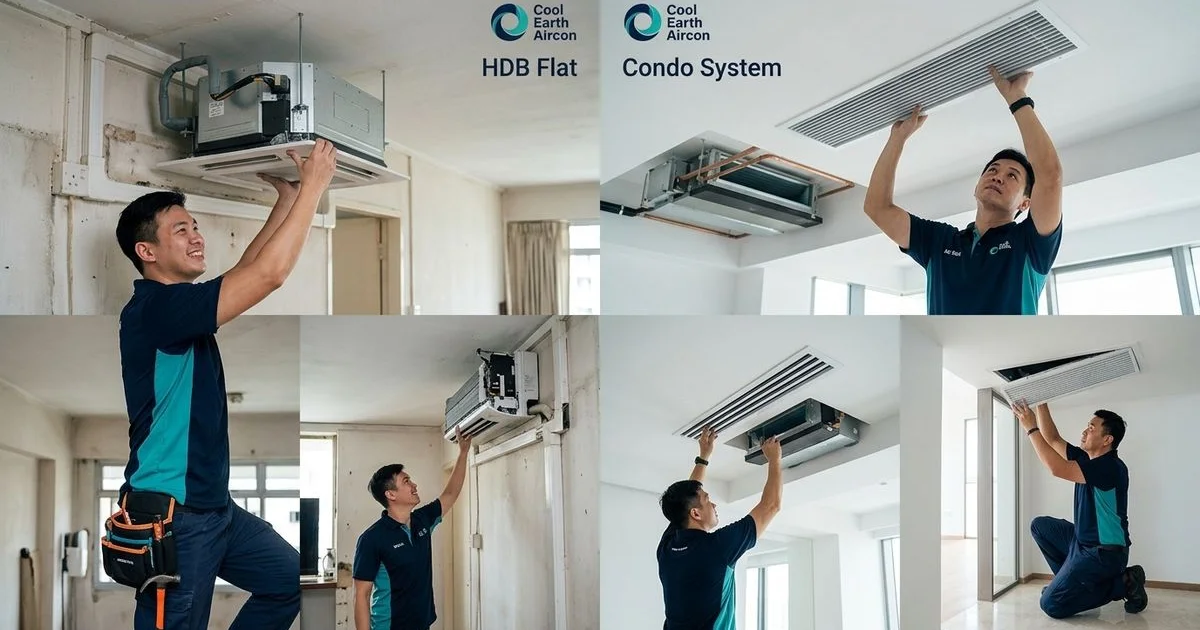
Most public housing in Singapore relies on standard split system air conditioners. This setup involves a single outdoor condenser unit wired to multiple indoor wall-mounted blowers via copper piping.
Condos present a different scenario entirely. Many newer luxury developments now utilise centralised cooling systems, such as the fan coil unit (FCU) setups managed by SP Group.
Instead of individual compressors, a central chilled water plant serves the whole building.
“Understanding the baseline infrastructure of your building is the single most important step before purchasing any cooling equipment.”
This structural distinction directly impacts your wallet. The choice between purchasing a $4,780 Mitsubishi Starmex split system and paying a flat-rate centralised chiller fee changes your decade-long maintenance strategy entirely.
Split Systems in HDB Flats
The vast majority of HDB flats run on multi-split setups. We frequently install System 3 or System 4 configurations to cover living rooms and bedrooms efficiently.
Matching the BTU (British Thermal Unit) capacity to your floor plan prevents energy waste.
System Selection by Flat Type
| HDB Flat Type | Recommended System | Typical Capacity Needed |
|---|---|---|
| 2-room Flexi | System 1 or System 2 | 9,000 to 12,000 BTU |
| 3-room | System 2 | Living room + 1 bedroom |
| 4-room | System 3 | Living room + 2 bedrooms |
| 5-room | System 3 or System 4 | Living room + 2-3 bedrooms |
| Executive | System 4 | Living room + 3 bedrooms |
HDB Installation Advantages
Designated ledges make condenser placement highly predictable. Newer Build-To-Order (BTO) designs feature dedicated access from the service yard to keep installation straightforward.
Shorter copper piping runs keep material costs low. A standard 4-room flat usually requires less than 15 metres of trunking between the indoor units and the outdoor compressor.
Electrical provisions are also highly standardised in modern blocks. BTO flats built after 1994 typically come with a 40-amp main switch, which easily supports a high-capacity System 4 unit.
Our technicians complete these standard routes quickly because the community layouts are identical.
This familiarity dramatically reduces the risk of drilling into concealed wiring.
HDB Installation Considerations
There are strict Housing and Development Board regulations you must follow to avoid heavy fines. You cannot simply drill through structural walls or overload the shared electrical circuit.
Weight and capacity limits are non-negotiable for safety reasons. The current 2026 guidelines restrict external wall panels to a maximum load of 110kg per bracket.
We must also ensure the setup does not exceed the approved electrical loading for your specific block.
Older flats with unupgraded 30-amp main switches are legally limited to a maximum running current of 8.5 amps for cooling equipment.
Noise control is another major factor when sharing walls with neighbours. The noise from your outdoor condenser can lead to official complaints if it exceeds the National Environment Agency (NEA) boundary limit of 60 dBA during the day.
Choosing an ultra-quiet model like the Daikin iSmile series, which operates at around 19 to 21 decibels indoors, helps maintain a peaceful environment for everyone.
Split Systems in Condos
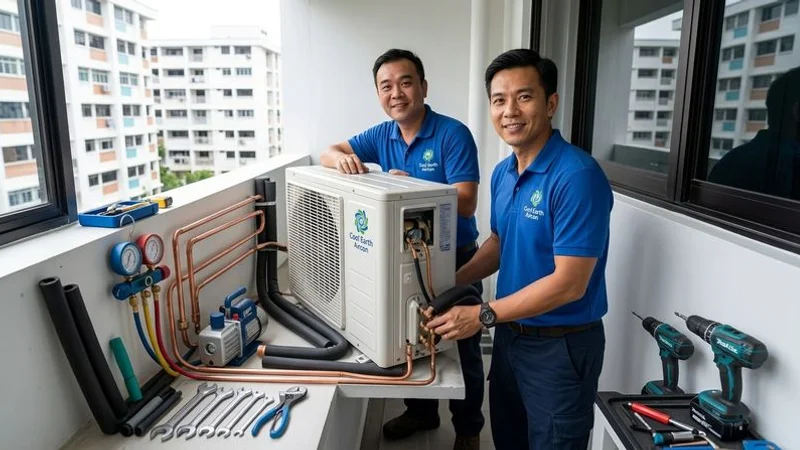
Many private residents choose split systems when their building lacks a central chiller. We often replace decommissioned central units with standalone multi-split networks.
Every Management Corporation Strata Title (MCST) enforces its own strict exterior guidelines.
Condo Split System Considerations
Condenser placement rules dictate exactly where outdoor units can sit. Some estates restrict installations strictly to the designated AC ledge or rooftop to preserve the building facade.
Here are the most common MCST restrictions you will face:
- Mandatory submission of BCA-certified installer credentials.
- Strict working hour limits (usually 9 AM to 5 PM on weekdays).
- Prohibitions on modifying balcony load-bearing walls.
- Required soundproofing pads under heavy outdoor compressors.
Longer piping runs are incredibly common in spacious private units. Efficiency drops significantly when copper lines exceed 20 metres between the bedroom blower and the balcony compressor.
Our installation teams frequently conceal piping within false ceilings to achieve a minimalist look.
This aesthetic upgrade adds roughly $200 to $800 to the total bill.
Working on high floors sometimes requires specialised access equipment. If your condenser ledge sits on a penthouse exterior, hiring a gondola or certified rope access technicians will add $200 to $500 to the installation.
The management approval process usually takes one to four weeks. You must submit a detailed method statement and put down a security deposit before any drilling begins.
Centralised Cooling Systems in Condos
Some luxury developments and new eco-towns feature a building-wide chiller plant. A central system pumps chilled water through insulated pipes directly to fan coil units (FCUs) inside each apartment.
How Centralised Systems Work
The FCU contains a heat exchanger and a blower fan. The chilled water absorbs ambient heat from the room, and the fan distributes the cooled air back into your living space.
Advantages of Centralised Systems
These setups offer several distinct lifestyle benefits. We see many homeowners appreciate the extra balcony space when the bulky compressor is removed.
The exterior facade of the building remains completely clutter-free.
- Zero outdoor equipment: You save valuable floor space on your ledge.
- Highly efficient cooling: Central chillers consume less electricity per unit of cooling than individual compressors.
- Silent operation: FCUs generate far less mechanical vibration than a standard split system.
- Aesthetic appeal: Balconies are free from hot exhaust air and ugly metal brackets.
Disadvantages of Centralised Systems
The primary drawback is the ongoing monthly chiller fee. Residents pay a metered rate for chilled water usage, regardless of actual electricity prices.
For example, the 2026 chilled water usage rate for SP Group’s centralised network in Tengah sits around 10.90 cents per kilowatt-hour refrigeration (kWrh) including GST.
Our clients often feel trapped because they cannot choose their own hardware brands or upgrade specific components.
If the central plant suffers a major breakdown, the entire residential block loses climate control simultaneously.
Converting back to a standard split system is notoriously expensive. Management approval is rare, and the physical conversion easily costs between $5,000 and $15,000 depending on ceiling modifications.
Centralised vs Split: Which Is Better?
The choice depends heavily on your long-term budget and preference for control.
| Factor | Centralised System | Split System |
|---|---|---|
| Monthly running cost | Higher (metered chiller fees) | Lower (standard electricity tariff) |
| Initial upfront cost | $0 (included with unit) | $2,000 to $5,500 |
| Temperature control | Limited to building settings | Full independent control |
| System maintenance | Building management handles chillers | Owner handles all servicing |
| Risk of failure | Single point of failure for block | Independent breakdown per room |
We strongly recommend standard split systems for most residential buyers.
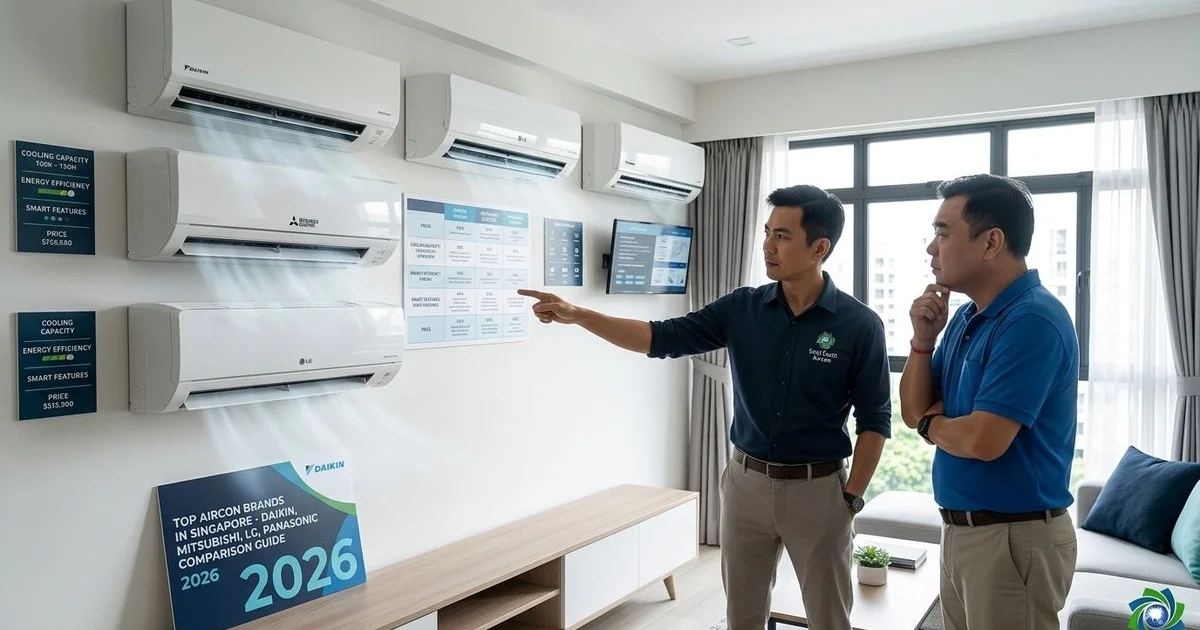
The higher initial purchase price grants you absolute control over your preferred brand and maintenance schedule. Check our guide on the best aircon brands to select a reliable option like Mitsubishi Electric or Panasonic.
Maintenance Differences
Regular upkeep is non-negotiable in Singapore’s humid climate. You need a dedicated strategy to keep the coils free of mould.
HDB Maintenance
Condenser access in public housing is thankfully quite simple. Most ledges are easily reachable through standard service yard windows.
Drainage pipes usually route directly to a visible external floor trap, making visual inspections easy.
We recommend a basic general service every three to four months for typical households.
A standard session for three wall units generally costs between $65 and $80.
Properties facing busy roads or construction sites require deeper cleaning. A full chemical wash every six to twelve months clears out stubborn, impacted highway dust that basic vacuuming misses.
Condo Maintenance
Private estates introduce a few distinct maintenance hurdles. Servicing a condenser on a 30th-floor ledge requires strict adherence to safety harness regulations.
Many luxury units route their drainage pipes through concealed ceiling voids. This makes slow leaks incredibly difficult to detect until water damages the expensive plasterboard.
Our technicians must coordinate closely with building security to secure loading bay access.
Stricter MCST noise regulations often limit our chemical overhaul work to narrow afternoon time slots.
Common Issues by Property Type
Different building designs naturally develop different hardware faults.
Typical HDB Issues:
- Rapid dust buildup from nearby Build-To-Order construction sites.
- Drainage pipe clogging caused by algae blooming in sun-exposed external pipes.
- Compressor overheating due to poor ventilation on cramped, older ledges.
Typical Condo Issues:
- Hidden drainage leaks destroying custom false ceilings.
- Excessively long piping runs causing reduced cooling performance in master bedrooms.
- Severe fan coil corrosion triggered by poor chilled water quality in centralised networks.
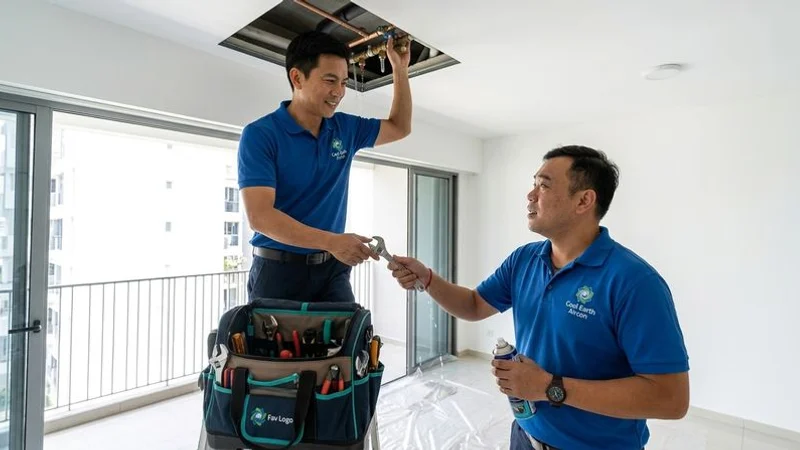
Cost Comparison
Let us look at the financial reality of cooling a standard three-bedroom home over a decade.
We calculated these 2026 figures based on typical hardware prices and standard electricity tariffs of around 27 cents per kWh.
Centralised costs fluctuate wildly depending on the specific developer’s billing contract.
| Cost Category | HDB (System 3) | Condo Split (System 3) | Condo Centralised |
|---|---|---|---|
| Hardware & Unit Cost | $1,800 to $3,500 | $1,800 to $3,500 | $0 (included) |
| Professional Installation | $500 to $700 | $700 to $1,200 | $0 |
| Annual Routine Servicing | $300 to $500 | $300 to $500 | $50 to $100 (FCU only) |
| Monthly Utility Bills | $80 to $150 | $80 to $150 | $100 to $400 (chiller fee) |
| 10-Year Total Estimate | $7,500 to $13,000 | $8,500 to $15,000 | $12,000 to $48,000 |
The long-term math reveals exactly why private owners often abandon their chiller systems. While the initial zero-dollar hardware cost looks appealing, those mandatory monthly chilled water fees compound aggressively over ten years.
Key Takeaways
Understanding HDB vs Condo Aircon: What to buy always comes down to your building’s strict infrastructure rules.
- HDB flats thrive on multi-split configurations. The standardised layouts make equipment fitting highly predictable and very affordable.
- Private split systems demand careful planning. You must follow rigid MCST guidelines, accommodate longer copper routes, and budget for potential false ceiling modifications.
- Centralised chillers offer a clean aesthetic. They remove the noisy outdoor condenser but lock you into fixed monthly utility rates.
- Maintenance dictates lifespan. Consistent servicing prevents catastrophic water leaks and compressor failures, regardless of where you live.
- Hardware quality matters deeply. We advise installing proven models like the Mitsubishi Starmex or Daikin iSmile. Read our brand comparison to verify the most energy-efficient options.
Our crew at Cool Earth Aircon handles complex setups in both public housing and private luxury estates daily.
The team understands the exact BCA safety protocols and weight limits required for your specific address.
Whether you are requesting a fresh installation, standard maintenance, or an intensive chemical wash, technicians will ensure total compliance.
Do you need clarification on the specific cooling regulations for your exact floor plan?
Send a WhatsApp message directly to wa.me/6594273833.
We will review your layout and provide an accurate, regulation-compliant recommendation immediately.

Brian founded Cool Earth Aircon in 2007. With 18 years of hands-on experience servicing aircon systems across Singapore, he leads a team that has maintained over 4,560 units.
Licensed Aircon Technician | 18 Years Experience | Three Best Rated (Tampines)