Choosing an aircon brand dictates your comfort and your electricity bills for the next 10 to 15 years. You know how frustrating it is when a supposedly premium appliance starts rattling just months after the warranty expires.
Get the decision right, and you enjoy reliable cooling alongside minimal repair headaches. Make the wrong choice, and you face frequent breakdowns and expensive replacement parts.
Our technicians have installed, serviced, and repaired every major system on the market since Cool Earth Aircon Services began in 2007.
Finding the best aircon brands in Singapore 2026 requires an honest comparison of actual performance, rather than just reading marketing brochures.
This guide provides a transparent evaluation based on real-world testing in local properties today. Let us examine the efficiency data, break down what the numbers actually mean for your daily usage, and explore which units genuinely deserve a spot in your home.
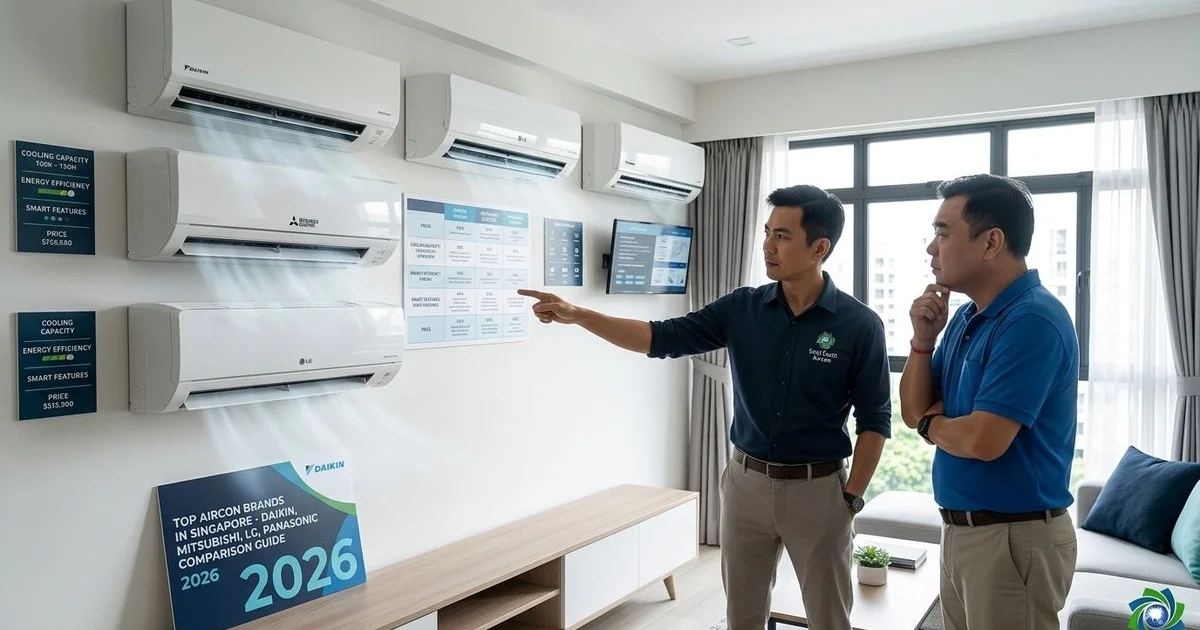
Best Aircon Brands in Singapore 2026: Honest Comparison at a Glance
| Brand | Reliability | Energy Efficiency | Price Range (per unit) | Parts Availability | Overall Rating |
|---|---|---|---|---|---|
| Daikin | Excellent | Excellent | $1,200 - $2,800 | Excellent | 9/10 |
| Mitsubishi Electric (Starmex) | Excellent | Very Good | $1,400 - $3,200 | Good | 8.5/10 |
| Panasonic | Very Good | Very Good | $900 - $2,200 | Good | 8/10 |
| LG | Good | Very Good | $1,000 - $2,500 | Good | 7.5/10 |
| Fujitsu | Very Good | Excellent | $1,100 - $2,400 | Fair | 7.5/10 |
| Samsung | Good | Good | $800 - $2,000 | Fair | 7/10 |
| Midea | Fair-Good | Good | $600 - $1,500 | Fair | 6.5/10 |
Prices are for system 2 (1 outdoor + 2 indoor units) including standard installation
Daikin: The Industry Standard
Best for: Most Singapore households, including HDB flats, condos, and landed properties.
If we had to recommend one brand that works well for the majority of local homes, it would be Daikin. The company has earned its position as the market leader through consistent product quality over decades.
What Makes Daikin Stand Out
Reliability. Daikin units simply do not break down as often as other options. A well-maintained Daikin system typically runs for 12 to 15 years with minimal issues beyond routine maintenance.
Energy efficiency. The highly popular Daikin iSmileEco series features exceptional inverter technology and utilises the eco-friendly R32 refrigerant. These 5-tick models consistently deliver the lowest electricity consumption in real-world conditions. Buyers upgrading to a 5-tick Daikin from an older 2-tick model often see annual electricity savings of up to $300.
Quiet operation. Daikin indoor units operate at a volume quieter than a whisper. The iSmileEco series produces noise levels as low as 19 dB on low fan speed. This near-silent performance makes it the ideal choice for light sleepers and nurseries.
Considerations Before Buying
Price. Daikin is not the cheapest option available. You pay a premium for the brand reputation and build quality. A system 3 setup can easily cost $3,000 to $4,000 including installation.
Proprietary components. Specific Daikin parts cost more to replace than generic equivalents. Printed Circuit Boards (PCBs) are brand-specific and require genuine replacements during repairs.
The Final Verdict on Daikin
For the average household, Daikin remains the safest choice. You pay more upfront but save significantly on electricity and repairs over the unit’s lifetime. If you feel unsure about what to buy, Daikin rarely disappoints.
Mitsubishi Electric (Starmex): The Premium Choice
Best for: Homeowners who want the highest build quality and are willing to invest in longevity.
Mitsubishi Electric’s Starmex range holds a firm reputation as a premium product in Singapore. The brand commands a loyal following among condo owners and buyers who prioritise long-term durability.
Advantages of the Starmex Range
Build quality. Mitsubishi units feel solid and exceptionally well-constructed. The internal components, including fan motors and compressors, are built to outlast most competitors.
Advanced filtration. The highly popular MSXY series features a Microparticle Catching Filter alongside a Dual Barrier Coating. This patented coating prevents dust and greasy dirt from sticking to the internal workings. Cleaner internal parts mean the aircon maintains its energy efficiency and cooling power for much longer.
Longevity. We frequently service Mitsubishi units that are 15 to 18 years old and still running perfectly. That kind of lifespan is exceptional in Singapore’s harsh, humid climate.
Drawbacks to Consider
Premium pricing. Mitsubishi stands as the most expensive mainstream option in the market. A Starmex System 3 typically costs between $3,500 and $4,500. This premium over Daikin is highly noticeable during the initial purchase.
Parts cost. Repairs require a larger budget when these units eventually break down. A Starmex PCB replacement can cost 20 to 30 percent more than the equivalent part from other manufacturers.
The Final Verdict on Mitsubishi
If budget constraints do not dictate your choice, the Mitsubishi Starmex is an outstanding investment. The total cost of ownership over 15 years often matches mid-range brands because the hardware simply requires fewer replacements.
Panasonic: The Reliable All-Rounder
Best for: Budget-conscious buyers who still demand high quality and excellent air purification.
Panasonic occupies a unique sweet spot in the local market. The brand delivers excellent quality, reasonable pricing, and solid reliability without the extreme premium of its top-tier rivals.
Key Strengths
Value for money. Panasonic offers comparable efficiency to Daikin at a noticeably lower price point. For a family outfitting a 4-room HDB flat on a strict budget, Panasonic represents a highly practical choice.
Nanoe-X technology. The patented Nanoe-X mark 3 air purification feature actively inhibits up to 99% of certain bacteria and viruses. This technology neutralises strong odours and prevents mould growth inside the fancoil. Your family breathes cleaner air, and the unit requires fewer chemical wash treatments.
Energy efficiency. The X-Premium Inverter series performs exceptionally well in real-world usage. These 5-tick models compete directly with the most expensive brands for massive electricity savings.
Potential Weaknesses
Acoustic levels. Lower-end Panasonic models can generate more noise than equivalent Daikin or Mitsubishi units. This is particularly noticeable when running the system on high fan speed.
Aesthetic design. Some users find the Panasonic indoor units look slightly dated. They lack the sleek, minimalist curves found on newer LG or Daikin models.
The Final Verdict on Panasonic
We recommend Panasonic most frequently to families looking for the best balance of price and performance. You receive premium features at a substantial discount. The Nanoe-X technology provides a genuine health benefit during hazy months.
LG: The Smart Home Player
Best for: Tech-savvy homeowners who demand WiFi control, modern aesthetics, and smart features.
LG has aggressively captured market share with its Dual Inverter range and seamless ThinQ smart home integration. If controlling your climate from your smartphone appeals to you, LG leads the pack.
Why LG Excels
Smart features. The LG ThinQ app allows you to adjust settings remotely, schedule cooling times, and receive instant maintenance reminders. The app even tracks precise energy usage in kilowatt-hours, helping you prevent unexpected utility bill shocks.
Dual Inverter compressor. This advanced technology provides rapid cooling while consuming minimal electricity. LG demonstrates immense confidence in this engineering by backing the compressor with a robust 10-year warranty.
Modern design. The indoor units look incredibly sleek and contemporary. The ArtCool series, with its mirrored dark finish, easily ranks as the most attractive aircon design available today.
Areas for Improvement
Historical reliability. LG has improved its manufacturing significantly in recent years. However, their historical track record locally does not completely match the legendary status of the Japanese brands.
Electronic complexities. Advanced smart features introduce more electronic components into the system. Our technicians occasionally see more sensor and PCB faults with highly connected units compared to basic models.
The Final Verdict on LG
LG is a fantastic choice for tech-forward buyers building a smart home. The built-in WiFi and energy tracking tools are incredibly useful. Buyers simply need to accept a slightly higher risk of minor electronic quirks over the unit’s lifespan.
Fujitsu: The Efficiency Champion
Best for: Homeowners who prioritise massive energy savings and ultra-compact designs.
Fujitsu frequently flies under the radar in Singapore, yet their machines quietly rank among the most efficient on the market. They represent brilliant Japanese engineering focused heavily on practical performance.
Fujitsu’s Main Advantages
Elite energy efficiency. The Fujitsu ASAH series easily achieves the National Environment Agency’s strict 5-tick rating. These models utilise R32 refrigerant and an Advanced Hyper Tropical Rotary Compressor to dramatically slash your monthly power consumption.
Compact dimensions. Fujitsu indoor fancoils are significantly smaller than average. This compact footprint proves incredibly advantageous when installing units in tight BTO bedroom corners or above narrow doorways.
Silent operation. These units run exceptionally quietly, ensuring uninterrupted sleep and a peaceful home environment.
The Trade-Offs
Smaller market share. Fewer independent service providers possess deep familiarity with Fujitsu’s specific diagnostic codes.
Parts sourcing. Sourcing specific replacement components for older models can sometimes take longer than ordering parts for a Daikin or Panasonic system.
The Final Verdict on Fujitsu
Fujitsu acts as a hidden gem for buyers who do their homework. The massive efficiency gains and compact sizes solve common installation problems perfectly. Buyers just need to ensure they hire technicians experienced with the brand.
Samsung and Budget Brands
Best for: Short-term housing, rental properties, or situations where upfront budget is the absolute primary constraint.
Samsung and dedicated budget brands like Midea offer the lowest entry prices in the market. A basic system 2 from these manufacturers can cost incredibly little to install initially.
The Innovation Angle
Samsung WindFree technology. Samsung has introduced a highly innovative feature called WindFree cooling. The indoor unit features 23,000 micro air holes that gently disperse cold air into the room. This completely eliminates the uncomfortable sensation of a harsh, cold draft blowing directly onto your bed. A WindFree System 3 typically costs around $4,200.
Midea’s aggressive pricing. The Midea All Easy Pro series provides tremendous value for budget-focused buyers. You can often secure a complete System 3 for roughly $2,500, making it highly attractive for landlords.
The Long-Term Reality
Lower upfront costs usually result in higher long-term expenses. Budget units typically suffer degraded energy efficiency much faster than premium Japanese brands. A unit that saves you $400 today but adds $15 to your monthly electricity bill is a poor long-term investment.
If you plan to move within three years, these brands will serve you adequately. You must simply commit to strict maintenance schedules. Budget compressors are highly unforgiving of neglected servicing and dirty filters.
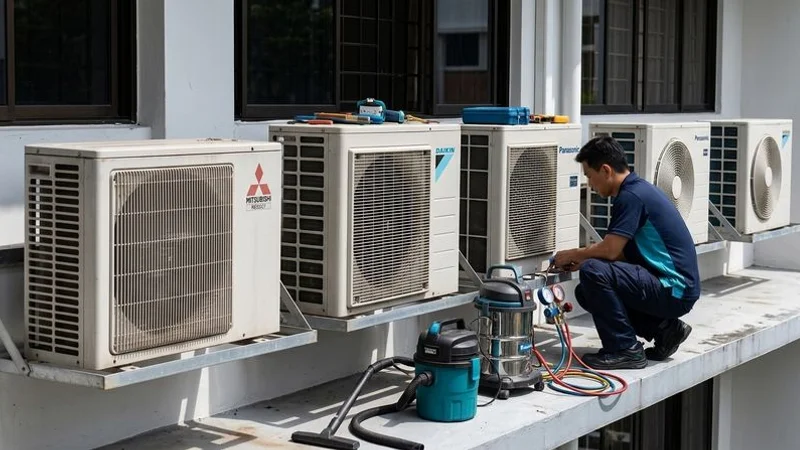
How to Choose the Right Brand for You
Making the final call requires matching your specific household needs with the strengths of each manufacturer.
To simplify your decision, we have created a direct comparison of the three most popular premium choices in Singapore.
Top 3 Premium Brands Compared
| Feature | Daikin (iSmileEco) | Mitsubishi (Starmex) | Panasonic (X-Premium) |
|---|---|---|---|
| Best Trait | Unbeatable reliability | Exceptional build quality | Excellent value & air cleaning |
| Filtration | Standard PM2.5 filter | Microparticle Catching Filter | Nanoe-X (Anti-bacterial) |
| Noise Level | Ultra-quiet (19 dB) | Very quiet (19 dB) | Quiet (21 dB) |
| Price Tier | High | Highest | Medium-High |
Quick Decision Guide
If you are still weighing your options, follow these straightforward recommendations based on different buyer priorities:
- Choose Daikin if you want the safest, most well-rounded choice with unbeatable after-sales support.
- Choose Mitsubishi Starmex if you demand the best internal hardware and gladly pay a premium for a 15-year lifespan.
- Choose Panasonic if you desire solid quality, a slightly lower price tag, and superior air purification.
- Choose LG if smartphone control, energy monitoring, and sleek aesthetics matter most to you.
- Choose Fujitsu if your primary goal is slashing electricity bills with a highly compact unit.
- Choose Samsung if you specifically want to avoid cold drafts using their unique WindFree technology.
Whichever Brand You Choose, Maintain It
When selecting from the best aircon brands in Singapore 2026, an honest comparison always reveals that maintenance matters just as much as the manufacturer.
A well-maintained budget aircon easily outperforms a neglected premium model.
The National Environment Agency mandates that all new multi-split aircons sold in Singapore must meet the strict 5-tick rating.
While buying an efficient model is crucial, keeping it clean is what actually preserves those energy savings. Failing to clean your system forces the compressor to work twice as hard to cool the same room.
This instantly destroys the energy efficiency you paid for.
The Importance of Regular Upkeep
To protect your investment, follow a strict maintenance schedule.
- Quarterly servicing: Schedule professional cleaning every three to four months to clear dust and check gas levels.
- Deep cleaning: Invest in periodic chemical washes to remove deep-seated mould and restore airflow.
- Prompt repairs: Address strange noises or suspected gas leaks immediately before they permanently damage the compressor.
Our team at Cool Earth Aircon services all major brands across the island. Whether you run a Daikin, Mitsubishi, Panasonic, LG, Fujitsu, or Samsung, we possess the specific technical knowledge to keep it running smoothly.
We also manage complete new installations when your old system finally stops working.
Need help choosing or installing an aircon system? WhatsApp us at wa.me/6594273833 with your room sizes and budget, and we will recommend the best option for your home.

Brian founded Cool Earth Aircon in 2007. With 18 years of hands-on experience servicing aircon systems across Singapore, he leads a team that has maintained over 4,560 units.
Licensed Aircon Technician | 18 Years Experience | Three Best Rated (Tampines)