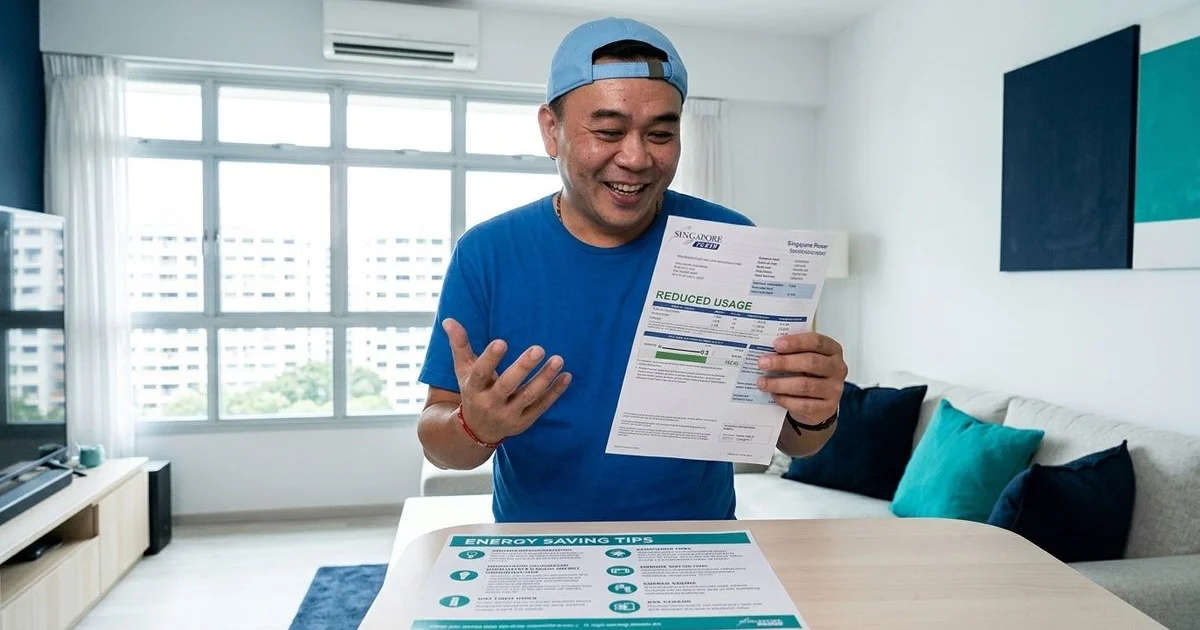
You already know that keeping an apartment cool takes a serious toll on the monthly budget. Our team at Cool Earth Aircon Services regularly shares 10 ways to reduce your aircon electricity bill in Singapore, because we see SP Group bills where cooling alone accounts for up to 40 percent of the total charge. For a typical 4-room HDB flat, that easily translates to $80 to $200 every single month just to stay comfortable.
This high cost of comfort is exactly why energy efficiency is a constant conversation. We often meet homeowners who assume the only way to save money is to sweat it out. That is simply not true.
Small adjustments can yield massive financial savings.
Our founder Brian started this company as a one-man operation in 2007, and we have spent years testing exactly what reduces power consumption. Let’s look at the data and explore ten specific strategies to cut your cooling costs by 20 to 40 percent.
1. Set Your Temperature to 24-25 Degrees Celsius
This is the single most impactful adjustment you can make today. The National Environment Agency strongly recommends setting your thermostat to 25 degrees Celsius for optimal energy efficiency. Every degree lower than 25 degrees increases your unit’s energy consumption by approximately 6 to 8 percent.
We base these calculations on the current SP Group electricity tariffs, which sit at roughly 30 to 31 cents per kilowatt-hour for 2026. This means a lower temperature directly multiplies your daily running costs.
The Maths
| Set Temperature | Approximate Monthly Cost (per unit, 8hrs/day) |
|---|---|
| 18°C | $65 - $85 |
| 20°C | $55 - $75 |
| 22°C | $45 - $60 |
| 24°C | $35 - $50 |
| 25°C | $30 - $45 |
Setting your thermostat to 18 degrees does not cool your room faster. The system cools at the exact same rate regardless of the target you choose. What happens at 18 degrees is that the compressor runs continuously without cycling off, because a Singapore bedroom rarely reaches that freezing point.
This continuous heavy lifting is what drives up the bill. Our technicians constantly see overworked compressors failing early for this exact reason. At 24 to 25 degrees, the compressor reaches the target and cycles off periodically. This cycling is exactly how modern systems operate efficiently.
Pro tip: If 25 degrees feels warm, use a ceiling fan or standing fan alongside the unit. Moving air makes the perceived temperature 2 to 3 degrees cooler, so 25 degrees with a fan feels like 22 to 23 degrees without one.
2. Use Fan Mode and Timer Settings
Your remote control has built-in features that most people ignore, yet they can save significant amounts of power.
Timer Mode
Set the unit to switch off automatically after a set number of hours. This strategy works exceptionally well at night.
- Most people fall into deep sleep within 1 to 2 hours.
- Body temperature naturally drops during sleep.
- Setting the timer for 3 to 4 hours means the motor runs for less than half the night.
- Estimated savings range from $20 to $40 per month.
Sleep Mode
Sleep mode gradually raises the set temperature by 1 to 2 degrees over several hours. This smart adjustment mimics your body’s decreasing need for cooling while you rest. Most major brands like Daikin, Mitsubishi, and Panasonic include this feature as a standard option.
Dry Mode for High Humidity
On days when stickiness is the main issue, switch to Dry mode (usually a water drop icon) instead of Cool mode. We highly recommend this for Singapore’s climate, where average relative humidity often exceeds 83 percent. Lowering humidity to around 60 percent feels significantly cooler than simply dropping the air temperature.
Dry mode focuses purely on extracting moisture from the air. The compressor runs at a slower, steadier pace, which uses far less energy than active cooling.
3. Clean Your Filters Every 2-4 Weeks
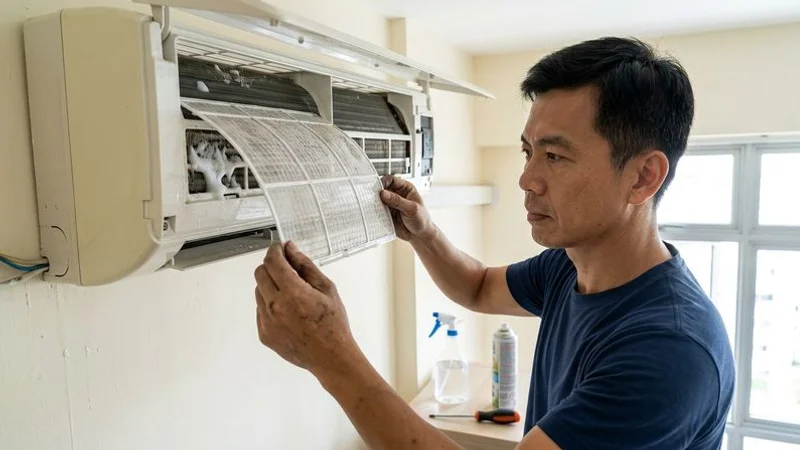
A clogged air filter remains one of the most common causes of system inefficiency. When the mesh is blocked with dust, the blower motor has to work up to 15 percent harder to push air into the room. This restricted airflow directly increases energy consumption.
Cleaning these simple components takes less than 5 minutes.
- Open the front plastic panel.
- Slide out the reusable mesh screens.
- Rinse them thoroughly under cold water.
- Let them dry completely and reinsert.
We have noticed that many clients who use secondary electrostatic filters, like 3M Filtrete, forget to replace them. These add-on filters catch fine particles but restrict airflow much faster than standard mesh. You must check them bi-weekly.
This 5-minute habit easily saves $10 to $30 per month. Over a year, that adds up to $120 to $360, which easily covers your annual maintenance costs.
4. Choose an Inverter System
If you still use an older, fixed-speed unit, upgrading to an inverter model is the best financial investment you can make for your home. The difference in energy consumption is massive.
Inverter vs Non-Inverter
Non-inverter (old technology): The compressor runs at full maximum speed until the room reaches the target, then shuts off completely. When the room warms up, it kicks back on at 100 percent power. This harsh on-off cycling wastes tremendous energy because starting a heavy motor from zero draws a massive power surge.
Inverter (modern technology): The compressor adjusts its speed continuously. It runs fast to cool the space quickly, then smoothly slows down to maintain the perfect climate. It never fully stops, which completely eliminates the energy-wasting restart cycle.
5-Tick Mandates and Government Subsidies
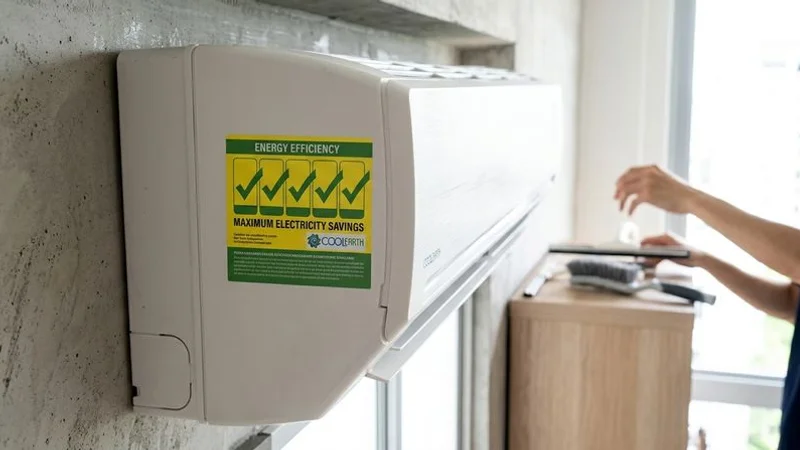
As of April 2025, the National Environment Agency mandates that all new multi-split systems sold in Singapore must carry a 5-tick energy rating. An inverter system uses 30 to 50 percent less electricity than an equivalent non-inverter model. For a household running three units for 8 hours daily, that translates to saving $40 to $80 every single month.
Our team wants you to take full advantage of the enhanced Climate Friendly Households Programme. Eligible households can now claim up to $400 in Climate Vouchers to offset the cost of a new 5-tick appliance. This massive government subsidy makes the upgrade an absolute no-brainer.
If your setup is more than 8 to 10 years old, the electricity savings from upgrading can pay for the new hardware within 3 to 5 years. Check our installation guide for current pricing on new inverter systems, and our brand comparison to choose the right one.
5. Seal Gaps and Insulate Your Room
Cool air escaping your bedroom forces the compressor to work continuously. Finding and sealing these minor leak points stops the waste immediately.
Common leak points include:
- Gap under the door - Use a simple door draft stopper ($5 to $15).
- Around the piping hole - Seal it completely with plumber’s putty or silicone.
- Windows - Ensure all louvers and casements are latched tightly.
- Sliding doors - Check the rubber weather seal strip and replace it if cracked.
The Curtain Effect
Drawing curtains, especially in west-facing rooms during the blazing afternoon, blocks direct solar heat gain. This simple physical barrier can reduce your cooling workload by 10 to 25 percent.
We strongly suggest applying window tinting or using 3M Sun Control films if you receive direct afternoon sun. These films reject up to 97 percent of the sun’s infrared light. Thick, lined blackout curtains also perform exceptionally well for bedrooms.
For a west-facing 4-room HDB living room, the difference between open and closed curtains on a sunny day can be as much as 2 to 3 degrees. This means the compressor does not have to fight the sun just to cool the air.
6. Service Your Aircon Regularly
A dirty machine is an incredibly inefficient machine. When the indoor evaporator coil gets coated in grime, it simply cannot absorb heat effectively. When the rotary fan blower clogs up with dust, it cannot push enough cold air into the space. The compressor compensates by running longer and harder, which silently drains your wallet.
The Servicing ROI
| Service | Cost | Estimated Monthly Savings | Payback Period |
|---|---|---|---|
| General servicing (quarterly) | $50/visit | $10 - $25 | 2-5 months |
| Chemical wash (annual) | $80 - $120 | $20 - $40 | 2-6 months |
| Annual contract | $200 - $350/year | $15 - $30/month | 7-12 months |
Regular servicing is about much more than just preventing breakdowns. It maintains the specific airflow efficiency that keeps your utility bill low. A well-maintained unit consumes 15 to 25 percent less power than a neglected one of the exact same age.
Our maintenance crews frequently respond to emergency water leaks caused by thick, jelly-like algae blocking the drainage pipe. Fixing these urgent choke issues often costs between $80 and $150 per visit. You can completely avoid these expensive emergencies, and keep power draw low, through routine cleaning.
7. Use a Smart Thermostat
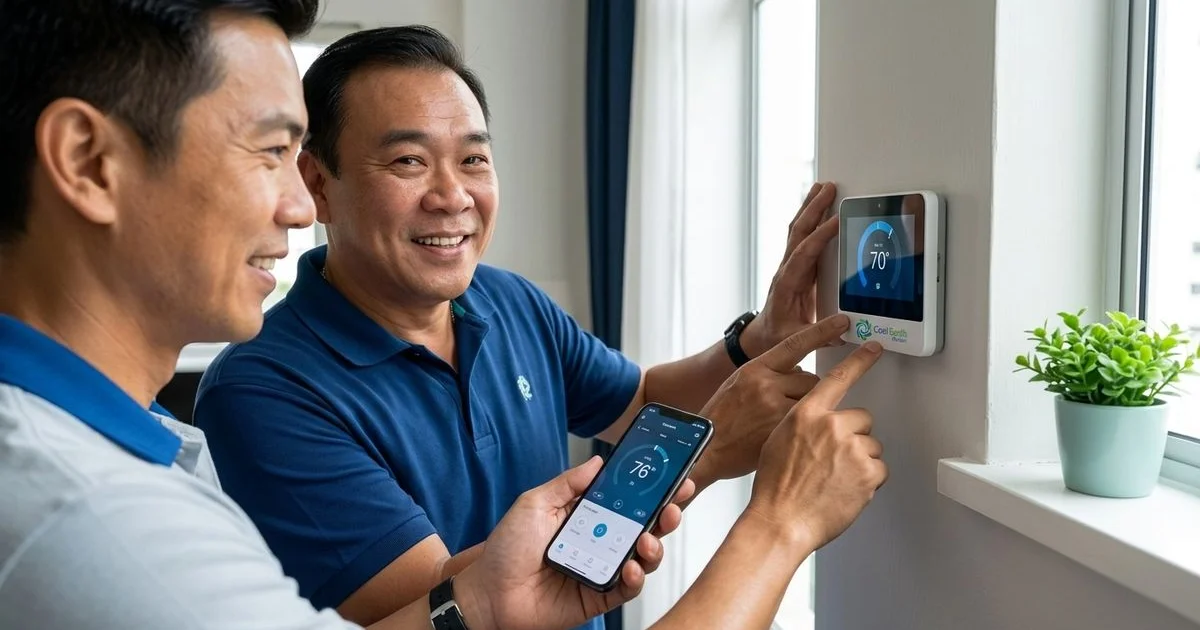
A WiFi-enabled controller like Sensibo, Ambi Climate, or the Tado Smart AC Control V3+ usually costs between $100 and $200. These clever devices help eliminate daily waste entirely.
- Automatically turns off the cooling when you leave the house.
- Sets strict schedules so the system only runs when actually needed.
- Monitors daily energy usage and identifies wasteful patterns.
- Allows full control from your smartphone for last-minute adjustments.
We highly recommend looking for models that feature Geofencing technology. This specific feature tracks your phone’s location and automatically shuts down the system the moment you leave your HDB block or condo premises.
The main financial return comes from eliminating the “forgotten aircon” scenario. Those wasted hours running in an empty living room easily add $30 to your monthly bill. For a detailed breakdown of the best devices, read our smart thermostat guide.
8. Right-Size Your BTU
Running an undersized compressor wastes significantly more electricity than running a properly sized one. An undersized unit runs continuously at maximum speed because it never actually reaches the target temperature. It consumes maximum wattage the entire time it is turned on.
BTU Guide for Singapore
A standard rule of thumb for Singapore properties is to multiply your room’s square footage by 60 to find the required British Thermal Units (BTU).
| Room Size | Recommended BTU | Too Small (waste) |
|---|---|---|
| Small bedroom (80-100 sq ft) | 9,000 BTU | Below 7,000 BTU |
| Master bedroom (120-150 sq ft) | 12,000 BTU | Below 9,000 BTU |
| Living room (200-300 sq ft) | 18,000-24,000 BTU | Below 15,000 BTU |
For west-facing walls with large windows, you must add 20 to 30 percent to your total BTU requirement. If your current setup is too small and constantly running, replacing it actually lowers your bill. The new, larger compressor reaches the target quickly and shifts into a low-power cruising speed.
We often see homeowners buy massively oversized 24,000 BTU units for small bedrooms thinking it is an upgrade. A massively oversized unit is also highly wasteful, as it cools the space too quickly and cycles off before it can remove the humidity. This rapid short-cycling leaves the room feeling cold but uncomfortably damp.
9. Maintain Your Outdoor Condenser
The outdoor condenser is the vital component where your system releases trapped indoor heat to the outside air. If it cannot breathe efficiently, the entire indoor cooling cycle slows down.
Common Condenser Issues
- Blocked aluminum fins from road dust, leaves, or bird droppings.
- Restricted airflow from household objects placed too close, like storage boxes or heavy laundry racks.
- Direct sunlight exposure baking the metal housing and raising the internal operating temperature.
What to Do
HDB and BCA regulations actually require proper ventilation clearances for these external brackets. You need to ensure the airflow remains completely unobstructed.
- Clear all physical objects within at least 30cm to 50cm of the metal housing.
- Remove visible dust and lint buildup from the back grilles.
- If the unit bakes in direct afternoon sun, consider installing a minor shade canopy, provided it does not block the exhaust fan.
- Ask your technician to thoroughly wash the outdoor coil during regular visits.
Our teams frequently fix tripped circuit breakers caused directly by overheating condensers. A clean exterior unit releases heat freely, which immediately reduces the electrical load on the compressor motor.
10. Upgrade Old Units
If your equipment is more than a decade old, it likely consumes 30 to 50 percent more power than a modern 2026 equivalent. This remains true even if the system seems to be blowing cold air just fine.
Older systems suffer from several hidden inefficiencies:
- Degraded motor efficiency from thousands of hours of mechanical wear.
- Outdated base technology, specifically single-speed compressors and lower-rated internal coils.
- Accumulated internal corrosion that severely reduces heat exchange capabilities.
- Older refrigerant gases.
The industry has largely shifted away from older R22 and R410A gases. Modern units utilise R32 refrigerant, which operates up to 15 percent more efficiently than R410A and carries a significantly lower environmental impact.
The Upgrade Calculation
Here is a realistic financial comparison for a standard System 3 setup used in most HDB flats.
| Factor | 12-Year-Old System | New 5-Tick Inverter |
|---|---|---|
| Monthly electricity (aircon) | $180 - $250 | $100 - $150 |
| Annual servicing | $300 - $500 | $250 - $400 |
| Repair risk | High ($200-$800/year) | Low (warranty covers) |
| Annual cost | $2,760 - $4,300 | $1,450 - $2,200 |
The annual cash savings of $1,000 to $2,000 mean a new system can easily pay for itself in just 2 to 4 years. We always remind clients about the long-term benefit. Once the payback period ends, those massive savings stay securely in your bank account.
Check our brand comparison for specific recommendations on the most energy-efficient R32 models. You can also review our aircon installation cost guide for transparent, up-to-date pricing.
Putting It All Together: 10 Ways to Reduce Your Aircon Electricity Bill in Singapore
Reviewing these 10 ways to reduce your aircon electricity bill in Singapore reveals a massive compounding effect on your utility costs. Here is a realistic estimate of the financial impact.
| Tip | Monthly Savings |
|---|---|
| Set temp to 24-25°C | $15 - $30 |
| Use timer/sleep mode | $20 - $40 |
| Clean filters regularly | $10 - $20 |
| Seal gaps and use curtains | $5 - $15 |
| Regular servicing | $10 - $25 |
| Smart thermostat | $15 - $30 |
| Total | $75 - $160/month |
For a Singaporean household currently spending $200 per month just on cooling, that represents a massive 35 to 80 percent reduction. Even executing just the top three methods will easily save you $45 to $90 every single month.

Lowering your electricity bill does not demand physical discomfort.
It simply means running the machinery smarter and maintaining the internal components correctly. You just need to ensure the cold air your system produces actually stays inside your bedroom.
Start Saving Today
Our dedicated technicians at Cool Earth Aircon Services want to help you maximise your equipment’s lifespan. Honest, data-driven advice always accompanies our highly thorough maintenance work. Whether you need routine servicing, deep chemical washes, or standard gas top-ups, our team ensures your compressor runs at absolute peak efficiency.
Are you ready to permanently reduce your monthly SP Group bill? The best first step is always a proper, professional inspection. Send us a quick message on WhatsApp at wa.me/6594273833 to get a fast, transparent quote.

Brian founded Cool Earth Aircon in 2007. With 18 years of hands-on experience servicing aircon systems across Singapore, he leads a team that has maintained over 4,560 units.
Licensed Aircon Technician | 18 Years Experience | Three Best Rated (Tampines)